


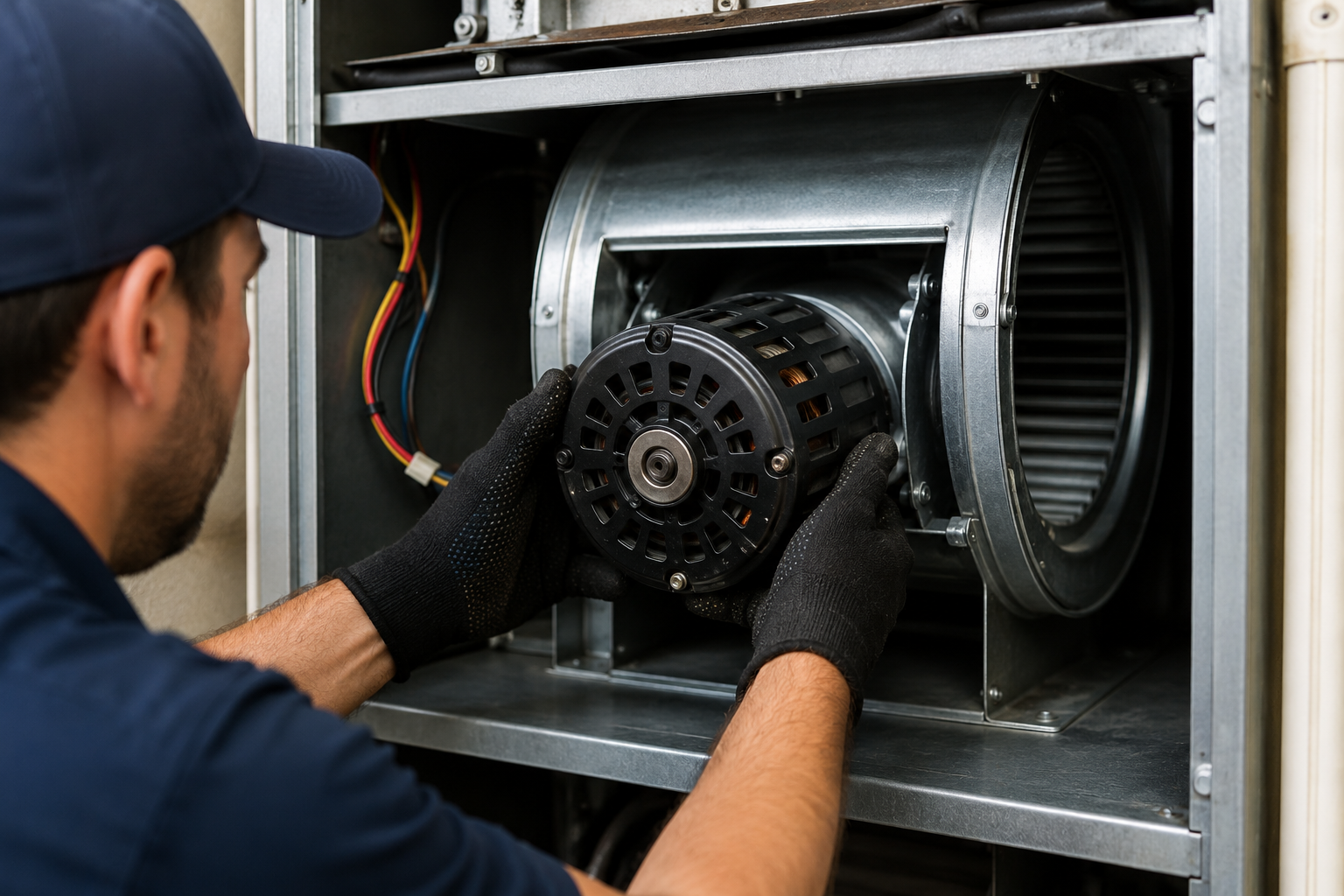
If your air conditioner smells musty the moment it kicks on, it’s usually a sign of moisture buildup, microbial growth, or drainage issues inside your HVAC system. In Dallas–Fort Worth’s hot and humid climate, this is one of the most common AC complaints homeowners experience, especially after periods of heavy cooling or system inactivity. The odor is not just unpleasant; it often indicates that your system needs maintenance before it affects your indoor air quality or health.
In this expert guide, we’ll break down exactly why your AC smells musty, what it means for your HVAC system, how to fix it, and when to call a professional technician in the DFW area.
We’ll cover:
- The real causes of musty AC smells
- How mold, mildew, and bacteria develop inside HVAC systems
- Drainage and airflow problems that trigger odors
- DIY troubleshooting steps homeowners can safely try
- When the smell signals a serious HVAC issue
- Prevention strategies used by HVAC professionals in Dallas
- Frequently asked questions that people search on Google and AI tools
Why Does My AC Smell Musty When It Turns On?
A musty smell from your air conditioner usually indicates excess moisture trapped inside the system, allowing mold, mildew, or bacteria to grow on internal components such as the evaporator coil, drain pan, or air ducts. When the system starts, that contaminated air is pushed into your home.
In Dallas homes, this issue is especially common due to long cooling seasons, high humidity spikes, and systems running continuously for months.
From an HVAC technician’s experience, a musty AC smell is not random; it always points to a specific mechanical or environmental cause inside the system.
What Causes a Musty Smell in Your AC System?
Below are the most common reasons HVAC systems develop that damp, moldy smell when turned on.
1. Mold and Mildew on Evaporator Coil
Your evaporator coil is one of the coldest parts of your AC system. When warm air passes over it, condensation forms. Over time, if not cleaned, this moisture becomes a breeding ground for mold and mildew.
Signs this is the issue:
- Musty smell starts within seconds of the AC turning on
- Smell is strongest near vents
- Reduced cooling efficiency
In Dallas–Fort Worth, this is one of the top service calls during peak summer.
2. Clogged or Dirty Condensate Drain Line
Your AC removes humidity from the air, and that water drains through a condensate line. If the line becomes clogged with algae, dust, or sludge, water backs up into the drain pan.
That standing water produces a strong musty odor that circulates through the system.
Common symptoms:
- Water pooling near the indoor unit
- AC shutting off unexpectedly
- Musty smell worsening over time
3. Dirty Air Filters Restricting Airflow
A clogged filter traps moisture, dust, and organic particles. This combination creates a perfect environment for microbial growth.
When airflow is restricted:
- Moisture lingers on coils
- System overheats internally
- Odors get recycled into the home
This is one of the simplest yet most overlooked causes.
4. Mold in Ductwork
If mold develops inside air ducts, every time your AC starts, it pushes contaminated air into your living spaces.
This is more common in:
- Older homes in Dallas
- Homes with previous water damage
- Poorly sealed duct systems
5. High Indoor Humidity Levels
Dallas humidity often spikes in summer, and if your system is oversized or poorly maintained, it may not dehumidify properly.
Excess humidity leads to:
- Damp duct surfaces
- Condensation inside vents
- Musty, stale air circulation
6. Biological Growth in Drain Pan
The drain pan collects condensation from the evaporator coil. If it isn’t cleaned regularly, it becomes a stagnant water reservoir where bacteria and mold thrive.
Is a Musty AC Smell Dangerous?
A mild musty odor is usually not immediately dangerous, but it should not be ignored.
Long-term exposure to mold spores can contribute to:
- Allergies
- Respiratory irritation
- Asthma flare-ups
- Headaches or sinus issues
In HVAC terms, the smell is an early warning system, your AC is telling you something is wrong internally.
How HVAC Experts Diagnose Musty AC Smells?
Professional technicians follow a structured diagnostic process:
Step 1: System Inspection
- Check evaporator coil condition
- Inspect the drain pan and the drain line
- Evaluate airflow and filter condition
Step 2: Moisture Assessment
- Identify condensation points
- Check humidity levels in the home
- Inspect insulation around ducts
Step 3: Air Quality Check
- Detect microbial growth inside ducts
- Test airflow distribution
- Identify contamination sources
Step 4: System Performance Test
- Measure cooling efficiency
- Check refrigerant levels
- Inspect blower motor performance
This structured approach ensures the real cause—not just the symptom—is addressed.
Quick Fixes You Can Try Before Calling an HVAC Technician
Some issues can be resolved with basic maintenance:
Replace Your Air Filter
Change your AC filter every 30–90 days using a high-quality pleated filter to reduce odors, dust buildup, and airflow restriction issues.
Clean Visible Drain Line Blockage
Flush the condensate drain line with a mild vinegar solution to remove algae, clear blockages, and restore proper water drainage flow.
Inspect Vents for Dust and Odor
Vacuum visible air vents and check for dust buildup, moisture, or mold signs that may contribute to musty AC odors.
Run “Fan Only” Mode
Run the fan-only setting for a few hours to help dry internal AC components and reduce lingering moisture inside system.
When Problems Persist
If musty smell continues after basic maintenance, deeper HVAC issues like mold growth, coil contamination, or duct cleaning are likely required.
When Do You Need Professional AC Repair in Dallas?
You should call an HVAC professional if:
- Musty smell returns after cleaning the filter
- Odor is strong or worsening
- You notice water leaks around the indoor unit
- Cooling performance drops
- You suspect mold inside ducts or coils
At this stage, professional cleaning or AC repair is required to prevent system damage. Astar DFW technicians specialize in diagnosing and repairing these issues across residential and commercial systems in the Dallas–Fort Worth area through Astar Air Conditioning, Plumbing & Electric.
How to Prevent Musty AC Smells in the Future?
Preventive maintenance is key in Texas climates.
Replace Air Filters Monthly in Peak Summer
Change filters every 30 days during heavy AC use to maintain airflow, reduce dust buildup, and prevent moisture-related microbial growth inside the system.
Schedule HVAC Tune-Ups Twice a Year
Book professional maintenance in spring and fall to clean coils, inspect components, and ensure your system runs efficiently before extreme temperatures.
Keep Drain Lines Clear at All Times
Regularly flush and inspect condensate drain lines to prevent algae buildup, water backups, and stagnant moisture that leads to musty odors.
Inspect Ductwork Annually for Contamination
Have ducts checked once a year for dust, mold, or leaks to ensure clean air circulation and prevent odor spread throughout your home.
Control Indoor Humidity Between 40–60%
Use proper ventilation or dehumidifiers to maintain balanced humidity levels, reducing conditions that encourage mold and mildew growth in your HVAC system.
Expert Tip from Dallas HVAC Technicians
Most musty AC smells are preventable with consistent maintenance routines, not emergency repairs, especially in high-humidity Dallas–Fort Worth climates.
FAQs
Why does my AC smell musty when I first turn it on?
From our experience at Astar Air Conditioning, Plumbing & Electric, this usually happens due to moisture buildup leading to mold or mildew on the evaporator coil or inside the drain pan.
Is it safe to run my AC if it smells musty?
In most cases, short-term use is not immediately harmful, but we strongly recommend inspection. Prolonged exposure can impact indoor air quality and comfort.
How do I get rid of a musty smell in my air conditioner?
We typically advise starting with a filter replacement and drain line cleaning. If the odor persists, professional coil or duct cleaning is usually required.
Can dirty air filters cause AC smell?
Yes. In our field inspections across Dallas–Fort Worth, clogged filters are one of the most common causes of trapped moisture, bacteria growth, and unpleasant odors.
How often should AC be serviced in Dallas?
We recommend servicing your HVAC system at least twice a year—before peak summer and winter, to prevent breakdowns and maintain indoor air quality.
Does a musty smell mean there is mold in the ducts?
Not always, but it is a strong warning sign. Mold may be present in ducts, coils, or drainage areas, which should be professionally inspected if the smell continues.
Book Professional AC Repair in Dallas–Fort Worth
If your AC is smelling musty, blowing weak air, or not cooling properly, it’s time to get it checked by a licensed HVAC professional before the issue gets worse.
At Astar Air Conditioning, Plumbing & Electric, we provide fast, reliable, and expert AC repair services across Dallas–Fort Worth. Our technicians diagnose the root cause, not just the symptoms, so you get a long-term fix, not a temporary patch.
What You Get With Our Service
- Full system inspection and diagnostics
- Evaporator coil and drain line evaluation
- Airflow and duct performance check
- Fast repair solutions using quality parts
- Preventive recommendations to avoid future issues
Schedule Your Service Today
Don’t wait for a small issue to turn into a major breakdown. Book your professional AC repair with our Dallas HVAC team and restore clean, fresh airflow to your home.
- Website:https://astardfw.com/
- Email: contact@astardfw.com
- Serving Dallas-Fort Worth, TX