


Mini-split systems have become one of the most popular HVAC solutions for homes across the Dallas–Fort Worth area, especially for homeowners seeking energy efficiency, flexible comfort, and ductless cooling.
But when comparing mini split systems, many homeowners get stuck on one important question: Should you choose a single-zone or multi-zone mini split system?
Choose a single-zone mini split for one room or targeted cooling. Choose a multi-zone system for multiple rooms, independent temperature control, better whole-home comfort, and improved long-term energy efficiency.
In this guide, we’ll explain the complete difference between single-zone and multi-zone mini splits, how each system works, its pros and cons, installation costs, energy efficiency, maintenance requirements, and which option makes the most sense for homes in North Texas.
What Is a Single-Zone Mini Split?
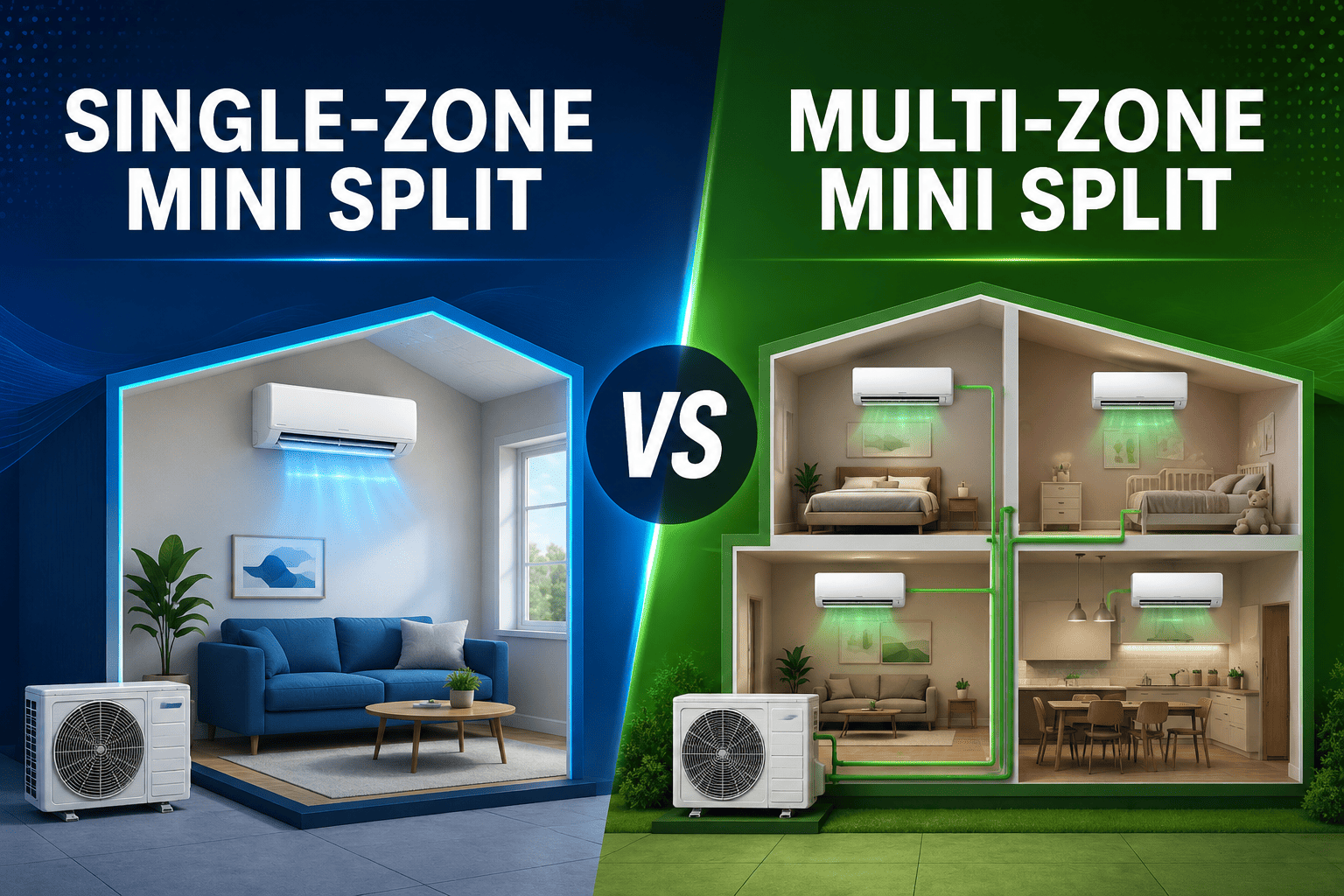
A single-zone mini split is a ductless HVAC system with one outdoor condenser connected to one indoor air handler, designed to heat or cool a single room or specific area independently. A single-zone mini split system consists of:
- One outdoor condenser
- One indoor air handler
This setup cools or heats one specific room or area independently.
How Single-Zone Mini Splits Work?
The indoor unit delivers conditioned air directly into one room while the outdoor condenser handles refrigerant circulation and heat transfer. Each indoor unit has its own thermostat controls, allowing precise temperature adjustment for that specific space.
Best Uses for Single-Zone Mini Splits
Single-zone systems are ideal for:
- Bedrooms
- Home offices
- Garages
- Small apartments
- Room additions
- Guest rooms
- Workshops
- Server rooms
- Sunrooms
Many homeowners in Dallas install single-zone mini splits in rooms that remain hotter than the rest of the house during summer.
What Is a Multi-Zone Mini Split?
A multi-zone mini split is a ductless HVAC system where one outdoor condenser connects to multiple indoor air handlers, allowing independent heating and cooling control in different rooms or zones of a home.A multi-zone mini split system connects:
- One outdoor condenser
- Multiple indoor air handlers
Each indoor unit controls a different room or zone independently. Depending on the system, one outdoor condenser may support:
- 2 zones
- 3 zones
- 4 zones
- Up to 8 zones in some larger systems
How Multi-Zone Mini Splits Work?
Each indoor air handler operates independently with separate temperature settings.
For example:
- Bedroom: 72°F
- Living room: 75°F
- Home office: 70°F
This zoning flexibility improves comfort while reducing wasted energy.
Single-Zone vs Multi-Zone Mini Splits: Major Differences
A single-zone mini split uses one outdoor unit + one indoor unit to heat or cool one room or area, while a multi-zone mini split uses one outdoor unit + multiple indoor units to independently control several rooms or zones at the same time.
|
Feature |
Single-Zone Mini Split |
Multi-Zone Mini Split |
|
Number of Rooms |
Cools/heats one room or area only |
Cools/heats multiple rooms independently |
|
System Setup |
1 outdoor unit + 1 indoor unit |
1 outdoor unit + multiple indoor units |
|
Installation Complexity |
Simple, faster installation, fewer components |
More complex, requires multiple lines and units |
|
Upfront Cost (Dallas Estimate) |
$3,000–$6,500 installed |
$7,000–$18,000+ installed |
|
Energy Efficiency |
Very high for single-room use, no duct loss |
High efficiency with zoning, may vary with usage |
|
Temperature Control |
One fixed zone temperature |
Independent control for each room/zone |
|
Best Use Case |
Bedrooms, garages, offices, small spaces |
Whole-home cooling, multi-room homes, zoned comfort |
|
Indoor Units |
One wall-mounted air handler |
Multiple wall-mounted air handlers |
|
Aesthetic Impact |
Minimal, only one visible unit |
More visible indoor units across rooms |
|
Maintenance |
Easier, fewer components to service |
More maintenance due to multiple units |
|
Comfort Flexibility |
Limited to one space |
High flexibility with personalized zoning |
|
Ideal Home Type |
Small homes or single-room cooling needs |
Large homes, multi-story homes, ductless properties |
Single-Zone vs Multi-Zone Mini Split Comparison
1. Number of Rooms Cooled
Single-Zone
A single-zone mini split is designed to condition only one space. It delivers focused heating or cooling to a single room, making it ideal for bedrooms, garages, or small areas where independent temperature control is needed without affecting the rest of the home.
- Cools one dedicated room
- Best for targeted comfort
- No multi-room control
Multi-Zone
A multi-zone system is built for whole-home flexibility. One outdoor unit connects to several indoor units, allowing each room or zone to maintain its own temperature settings for personalized comfort throughout the house.
- Cools multiple rooms independently
- Separate temperature control per zone
- Ideal for whole-home zoning
2. Installation Complexity
Single-Zone
Single-zone systems are easier and faster to install because they require only one indoor unit and a simple connection to the outdoor condenser. This makes them less disruptive and ideal for quick HVAC upgrades or single-room projects.
- Simple installation process
- One indoor unit only
- Less labor and time required
Multi-Zone
Multi-zone systems are more complex due to multiple indoor units and extended refrigerant and electrical connections. Installation requires careful planning to ensure balanced performance across all zones.
- Multiple indoor air handlers
- More refrigerant and wiring work
- Longer installation time
3. Upfront Installation Cost
Single-Zone Mini Split Cost
Single-zone systems are more budget-friendly because they include fewer components and simpler installation. They are commonly used for smaller projects or supplemental cooling in specific areas.
- Lower upfront investment
- Typically $3,000–$6,500 installed
- Cost-effective for single rooms
Multi-Zone Mini Split Cost
Multi-zone systems cost more due to additional indoor units, larger outdoor condensers, and increased labor. However, they provide greater flexibility for whole-home comfort.
- Higher initial cost
- Typically $7,000–$18,000+ installed
- Price depends on number of zones
4. Energy Efficiency
Single-Zone Efficiency
Single-zone mini splits are highly efficient because they condition only one space at a time, eliminating duct losses and reducing unnecessary energy use in unoccupied areas.
- No duct energy loss
- Efficient for single rooms
- Lower energy waste overall
Multi-Zone Efficiency
Multi-zone systems remain efficient by allowing selective cooling, but efficiency can vary when multiple zones run simultaneously. Still, they outperform traditional central HVAC in zoning control.
- Zoned cooling reduces waste
- Efficient for whole-home use
- Slight efficiency variation under heavy load
5. Temperature Control
Single-Zone
Single-zone systems offer simple control for one space only. The temperature is set for a single room, making it straightforward but limited in flexibility for larger homes.
- One temperature per system
- Simple thermostat control
- Best for individual rooms
Multi-Zone
Multi-zone systems allow each room to have independent temperature settings. This is ideal for households with different comfort preferences or uneven heating and cooling patterns.
- Independent room control
- Personalized comfort settings
- Great for multi-story homes
6. Appearance and Space Requirements
Single-Zone
Single-zone systems require only one indoor unit, making them less visually intrusive and easier to integrate into a room without affecting interior design.
- One wall-mounted unit
- Cleaner room appearance
- Minimal visual impact
Multi-Zone
Multi-zone systems require multiple indoor units placed in different rooms, which can affect aesthetics depending on homeowner preference and interior layout.
- Multiple indoor units visible
- Requires more wall space
- Functional but more noticeable
7. Maintenance Requirements
Single-Zone
Single-zone systems are easier to maintain because there are fewer components to service. Routine cleaning and occasional professional servicing are typically sufficient.
- Fewer components to maintain
- Simpler filter cleaning
- Lower maintenance effort
Multi-Zone
Multi-zone systems require maintenance across multiple indoor units, including filters and drainage systems. Regular HVAC servicing is important to maintain balanced performance.
- Multiple units to service
- More frequent upkeep needed
- Professional maintenance recommended
Which Mini Split System Is Better for Dallas Homes?
Choose a single-zone mini split if you only need heating and cooling for one room or area, such as a garage conversion, bedroom, home office, or sunroom. It’s more affordable, easier to install, and highly energy-efficient for small spaces.
Choose a multi-zone mini split if you want to cool or heat multiple rooms independently with separate temperature controls. It’s ideal for larger homes, multi-story houses, or properties without ductwork where different rooms require customized comfort settings.
In most Dallas–Fort Worth homes:
- Single-zone systems work best for targeted comfort solutions.
- Multi-zone systems are better for whole-home zoning and long-term energy savings.
Single-Zone vs Multi-Zone Mini Splits: Pros and Cons
Single-Zone Mini Split Pros
- Lower installation cost
- Easier installation
- Excellent efficiency
- Quiet operation
- Ideal for single rooms
Single-Zone Mini Split Cons
- Only cools one area
- Multiple rooms require multiple systems
- Limited scalability
Multi-Zone Mini Split Pros
- Zoned comfort
- Whole-home flexibility
- Better energy management
- Fewer outdoor units
- Independent temperature control
Multi-Zone Mini Split Cons
- Higher upfront cost
- More complex installation
- More maintenance
- Multiple indoor air handlers visible
Book Mini Split Installation in Dallas–Fort Worth
At Astar Air Conditioning, Plumbing & Electric, our experienced HVAC technicians help homeowners throughout Dallas–Fort Worth choose the right ductless cooling solution for their property. Whether you need a single-zone mini split for a garage conversion or a multi-zone system for whole-home comfort, we provide professional system design, installation, repair, and maintenance services tailored to North Texas conditions.
Our team installs energy-efficient mini split systems designed to handle extreme Texas heat while improving comfort, airflow, and long-term efficiency. Learn more about our cooling services at Astar DFW Air Conditioning Services.
Final Thoughts: Single-Zone vs Multi-Zone Mini Splits
Single-zone and multi-zone mini splits both offer outstanding efficiency, flexibility, and comfort compared to traditional HVAC systems. The right choice depends on your home size, cooling goals, budget, and whether you need one-room cooling or complete zoned temperature control.
For smaller projects, single-zone systems provide affordable and highly efficient comfort. For larger homes or multiple rooms, multi-zone systems deliver personalized cooling with long-term energy savings.
If you’re considering ductless mini split installation in Dallas–Fort Worth, working with an experienced HVAC contractor ensures the system is properly sized, professionally installed, and optimized for Texas weather conditions.