


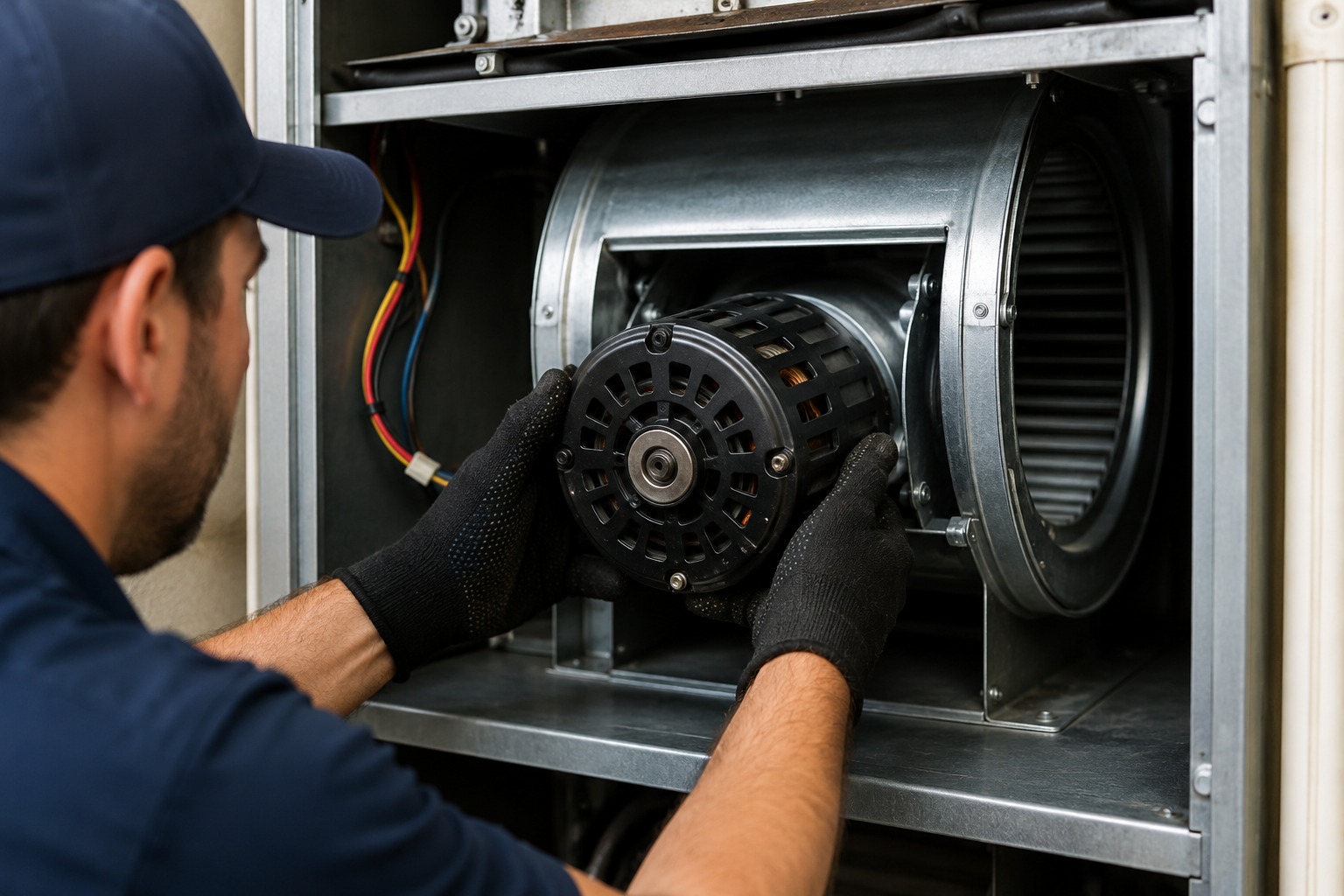
When your HVAC blower motor stops working, your entire heating and cooling system can fail to circulate air properly through your home. You may notice weak airflow, strange noises, rising energy bills, warm air coming from vents during summer, or an HVAC system that won’t turn on at all.
In Dallas and the DFW Metroplex, where air conditioning systems work hard for much of the year, blower motor problems are one of the most common HVAC repair issues homeowners face. Understanding the warning signs, possible causes, and troubleshooting steps can help prevent larger and more expensive system failures.
In this guide, we’ll cover everything Dallas homeowners need to know about HVAC blower motor problems, including how blower motors work, common reasons they fail, troubleshooting tips,and when to call an experienced HVAC technician from Astar Air Conditioning, Plumbing & Electric.
What Does an HVAC Blower Motor Do?
The blower motor is one of the most important components inside your HVAC system. It powers the fan that pushes conditioned air through your ductwork and into every room of your home.
Whether your system is cooling during a Texas summer or heating during winter, the blower motor ensures consistent airflow and indoor comfort.
Without a functioning blower motor:
- Cool air may never reach your vents
- Your furnace may overheat
- Your AC system can freeze up
- Energy efficiency drops significantly
- Indoor comfort becomes inconsistent
Most residential HVAC systems in Dallas use either:
-
Single-Speed Blower Motors
Operate at one constant speed.
-
Variable-Speed Blower Motors
Adjust airflow automatically for improved comfort, humidity control, and energy efficiency.
Variable-speed systems are increasingly common in modern high-efficiency HVAC installations throughout the DFW area.
Signs Your HVAC Blower Motor Is Not Working
Many homeowners initially assume the entire AC system has failed when the actual issue is the blower motor.
Here are the most common warning signs.
-
Weak or No Airflow From Vents
If your air conditioner or furnace turns on but little or no air comes from the vents, the blower motor may not be spinning properly. This is one of the clearest indicators of blower motor failure.
-
HVAC System Hums but Fan Does Not Spin
A humming sound without airflow often indicates:
- Failed capacitor
- Seized blower motor bearings
- Electrical failure
- Overheated motor
3. Burning Smell From Vents
An overheating blower motor can create:
- Burning electrical odors
- Melting wire smells
- Hot metal odors
This should never be ignored because electrical motor failures can become serious safety risks.
4. Frequent Circuit Breaker Trips
A failing blower motor may draw excessive electrical current and repeatedly trip the breaker.
5. Unusual HVAC Noises
Listen for:
- Squealing
- Grinding
- Rattling
- Buzzing
- Scraping sounds
These noises often indicate worn bearings, loose parts, or damaged blower-wheel components.
6. AC Runs but House Won’t Cool
Your outdoor condenser may still operate normally while the blower motor fails to circulate air indoors.
This causes uneven temperatures and poor cooling performance.
7. Frozen Evaporator Coil
Poor airflow from a failing blower motor can cause the evaporator coil to freeze, especially during Dallas summer heat waves.
Common Reasons an HVAC Blower Motor Stops Working
Several mechanical and electrical issues can cause blower motor failure.
Dirty Air Filter
A clogged air filter restricts airflow, forcing the blower motor to work harder and overheat.
Failed Capacitor
The capacitor helps start the blower motor. When it fails, the motor may hum but not spin.
Overheated Motor
Long HVAC runtimes, especially during Dallas summers, can cause the blower motor to overheat and shut down.
Electrical Problems
Loose wiring, faulty relays, tripped breakers, or damaged control boards can stop the blower motor from receiving power.
Worn Motor Bearings
Old or damaged bearings create friction, causing grinding noises, overheating, and motor failure.
Faulty Thermostat
Incorrect thermostat settings or wiring issues may prevent the blower motor from turning on.
Dirty Evaporator Coils
Blocked coils reduce airflow and place extra strain on the HVAC blower motor.
Blocked Air Vents
Closed or obstructed vents increase system pressure and reduce airflow efficiency.
Aging HVAC System
Older blower motors naturally wear out over time and become less reliable and energy efficient.
How to Troubleshoot an HVAC Blower Motor?
Before calling an HVAC professional, homeowners can safely perform a few basic troubleshooting steps. These checks may help restore airflow, identify simple HVAC problems, and prevent unnecessary repair costs or system damage.
Check the Thermostat Settings
Incorrect thermostat settings can prevent the blower motor from operating properly. Ensure the system is set correctly and the fan settings are properly configured for heating or cooling operation.
- Set thermostat to COOL or HEAT
- Lower temperature below room temperature
- Check the fan setting is on AUTO or ON
- Replace thermostat batteries if needed
Inspect the Air Filter
A dirty HVAC air filter restricts airflow and places extra strain on the blower motor. Replacing a clogged filter can improve airflow, efficiency, and overall HVAC system performance immediately.
- Remove and inspect the filter
- Replace dirty or clogged filters
- Use the correct filter size
- Check filters monthly during the summer
Check the Circuit Breaker
A tripped circuit breaker may stop the blower motor from receiving power. Inspect your electrical panel carefully and reset the breaker once before calling an HVAC technician.
- Locate the HVAC breaker
- Reset the breaker once
- Avoid repeated breaker resets
- Call a professional if it trips again
Listen for Unusual HVAC Sounds
Different HVAC noises can indicate specific blower motor problems. Strange sounds often signal worn components, electrical issues, or airflow restrictions that require professional HVAC inspection.
- Humming — capacitor problem
- Grinding — worn motor bearings
- Buzzing — electrical issue
- Squealing — belt or bearing wear
- Clicking — relay or control board problem
Inspect for Ice Around the Indoor Unit
Frozen evaporator coils usually indicate restricted airflow or blower motor issues. Continuing to run a frozen HVAC system can damage the compressor and increase repair costs significantly.
- Turn the HVAC system OFF
- Allow coils to fully thaw
- Check airflow restrictions
- Replace dirty air filters
Check Vents and Registers
Blocked or closed vents increase duct pressure and strain the blower motor. Proper airflow helps maintain HVAC efficiency, comfort, and long-term system reliability throughout your home.
- Keep vents fully open
- Remove furniture blocking airflow
- Clean dusty air registers
- Ensure airflow throughout all rooms
When to Call an HVAC Professional in Dallas?
Some HVAC issues require professional diagnostics and repair. You should call a licensed technician if:
- The blower motor won’t start
- Breakers repeatedly trip
- You smell burning odors
- The system overheats
- Airflow remains weak
- Ice repeatedly forms on coils
- The blower motor makes loud noises
- Your AC system cycles abnormally
Professional HVAC technicians use specialized tools to safely diagnose:
- Voltage problems
- Capacitor failure
- Motor amperage
- Control board issues
- Static pressure problems
- Airflow restrictions
The team at Astar DFW Air Conditioning Services handles blower motor repairs, AC diagnostics, furnace issues, and emergency HVAC service across Dallas-Fort Worth.
Repair or Replace the HVAC Blower Motor?
Whether to repair or replace the blower motor depends on several factors.
1. Repair May Make Sense If:
- The system is under 10 years old
- The issue is minor
- The capacitor failed
- Bearings are still functional
- The motor housing is intact
2. Replacement May Be Better If:
- The motor has burned out
- Repairs are recurring
- The HVAC system is older
- Energy efficiency is poor
- Variable-speed components have failed
- Repair costs approach replacement costs
In older systems, replacing the entire HVAC system may provide better long-term value.
How to Prevent HVAC Blower Motor Failure?
Preventative HVAC maintenance helps extend blower motor lifespan, improve airflow, reduce energy costs, and prevent costly breakdowns. Simple routine care can keep your heating and cooling system operating efficiently year-round.
- Replace HVAC air filters regularly
- Schedule annual HVAC maintenance
- Keep air vents open and clean
- Address unusual HVAC noises early
- Clean evaporator and condenser coils
- Avoid overworking the HVAC system
- Inspect electrical connections routinely
- Maintain proper indoor airflow
- Upgrade aging HVAC components when needed
- Monitor thermostat performance regularly
Frequently Asked Questions
Why is my AC running but no air coming out of the vents?
At Astar DFW, we commonly diagnose this issue as a failed blower motor, clogged air filter, frozen evaporator coil, bad capacitor, or restricted HVAC airflow problem.
Can a blower motor reset itself?
Yes, some blower motors temporarily reset after overheating. However, repeated shutdowns usually indicate airflow restrictions, electrical problems, or failing HVAC components requiring professional repair and system inspection.
How long do HVAC blower motors last?
Most HVAC blower motors last between 10–20 years with proper maintenance. Dallas HVAC systems often experience faster wear due to prolonged cooling seasons and extreme summer temperatures.
Is it safe to run HVAC with a bad blower motor?
No. Operating your HVAC system with a failing blower motor can damage the compressor, freeze evaporator coils, overheat components, and significantly increase overall HVAC repair costs.
What causes a blower motor to overheat?
At Astar DFW, common causes include dirty filters, blocked airflow, worn bearings, electrical issues, failing capacitors, dirty evaporator coils, and neglected HVAC system maintenance or servicing.
How do I know if my blower motor capacitor is bad?
Common signs include humming noises, weak airflow, delayed startup, overheating, intermittent operation, or a blower fan that struggles to spin during HVAC system operation.
Can low refrigerant affect the blower motor?
Yes. Low refrigerant can freeze evaporator coils and reduce airflow, forcing the blower motor to work harder and increasing overheating risks and long-term HVAC component strain.
Why does my blower motor keep shutting off?
Frequent shutdowns often indicate overheating, airflow restrictions, electrical problems, frozen evaporator coils, or failing HVAC components that require professional diagnosis and repair from Astar DFW technicians.
Call Astar DFW HVAC Technicians in Dallas for Blower Motor Repair
If your HVAC blower motor is not working properly, don’t wait for a complete system breakdown during the Dallas heat. The experienced team at Astar DFW provides professional HVAC blower motor repair, AC diagnostics, airflow troubleshooting, and emergency HVAC services across Dallas-Fort Worth. Call Astar DFW today to schedule fast, reliable HVAC repair from trusted local technicians.
- Website:https://astardfw.com/
- Email: contact@astardfw.com
- Serving Dallas-Fort Worth, TX