


Your air conditioner does more than cool your home during the brutal Dallas–Fort Worth summer heat. It also removes humidity from indoor air, and that moisture exits your HVAC system through the AC drain line. When that condensate drain line becomes clogged, it can lead to water leaks, mold growth, musty odors, high indoor humidity, and even complete system shutdowns.
In this guide, we’ll cover how to clean an air conditioner drain line, signs of a clogged AC drain line, causes of blockages, DIY cleaning methods, preventive maintenance tips, and when to call professional HVAC technicians in Dallas–Fort Worth.
What Is an AC Drain Pipe?
An AC drain pipe, also called a condensate drain line, is an essential part of an air conditioning system that removes excess moisture created during the cooling process. As warm indoor air passes over the cold evaporator coil, condensation forms and collects inside the system. The drain pipe safely carries this water outside the home or into a designated drainage area, helping prevent water leaks, mold growth, humidity issues, and damage to the HVAC system. Most AC drain lines are made from PVC piping or flexible tubing and are commonly located near the indoor air handler or outdoor unit.
Why Did My AC Drain Line Clog?
AC drain lines usually clog because moisture, dirt, algae, and debris build up inside the condensate pipe over time. Without regular HVAC maintenance, these blockages can eventually restrict drainage and cause water leaks.
Algae and Mold Growth
The dark, damp interior of the AC drain line creates ideal conditions for algae, mildew, mold, and slime buildup, which can slowly block condensate flow and restrict proper drainage.
Dust and Dirt Accumulation
Dust, pet hair, and airborne debris can enter the HVAC system and combine with moisture inside the drain line, creating thick sludge that eventually causes condensate clogs and backups.
Lack of HVAC Maintenance
Without routine air conditioning maintenance, condensate drain lines often go unchecked for months or years, allowing buildup to accumulate until the line becomes completely blocked and overflows occur.
Rust or Drain Pan Debris
Older HVAC systems may develop rust, corrosion, or debris inside the condensate drain pan. These particles can enter the drain line and create partial or complete blockages over time.
High Dallas–Fort Worth Humidity
Long cooling seasons and high humidity levels in Dallas–Fort Worth cause AC systems to produce heavy condensate continuously, increasing moisture buildup and making drain line clogs more common in Texas homes.
How To Know If The AC Drain Pipe Is Clogged?
A clogged AC drain line often causes water leaks, humidity problems, strange odors, and cooling issues. Recognizing the warning signs early can help prevent expensive water damage and HVAC system breakdowns.
Water Around Indoor Unit
Water pooling near the indoor air handler or furnace is one of the most common signs of a blocked condensate drain line, preventing moisture from draining properly outside.
AC Shut Off Suddenly
Many modern HVAC systems include a safety float switch that automatically shuts down the air conditioner when rising water levels indicate a clogged condensate drain line.
Musty or Moldy Smells
Standing water trapped inside the drain system can encourage mold, mildew, and bacteria growth, causing musty odors that spread through your home whenever the AC operates.
Increased Indoor Humidity
When condensate cannot drain correctly, excess moisture may remain inside the home, making indoor air feel sticky, damp, and uncomfortable despite the air conditioner running continuously.
Water Stains on Ceiling or Walls
Overflowing attic drain pans can leak into ceilings or walls, creating yellow stains, peeling paint, warped drywall, and potential structural water damage inside the home.
Dripping or Gurgling Sounds
Unusual dripping, bubbling, or gurgling noises near the indoor HVAC unit may indicate trapped water struggling to move through a partially blocked condensate drain line.
Tools and Materials Needed for Cleaning an AC Drain Line
Before you start cleaning your air conditioner’s drain line, make sure you have the right tools and materials ready. Having everything prepared will make the process faster, safer, and more effective.
- Wet/dry vacuum (shop vac) for removing clogs from the drain line
- Clean rags or cloths for wiping and drying around the unit
- Funnel (if required for your specific AC drain access point)
- White vinegar or a diluted bleach solution for breaking down algae and mold
- Stiff brush for scrubbing visible buildup around the drain opening
- Garden hose (optional, depending on whether you flush from outside or inside the system)
How to Clean an Air Conditioner Drain Line?
Cleaning an AC condensate drain line is often manageable for homeowners if the clog is minor. However, severe blockages may require professional HVAC service.
Step 1: Turn Off the HVAC System
Before performing any maintenance:
- Turn off the thermostat
- Shut off the power at the breaker
- Ensure the system is completely powered down
Safety should always come first when working around HVAC equipment.
Step 2: Locate the Condensate Drain Line
The drain line is usually a white PVC pipe located near the outdoor condenser unit or indoor air handler.
Common locations include:
- Near the furnace
- Attic HVAC systems
- Utility closets
- Garage installations
Look for a T-shaped vent with a removable cap.
Step 3: Inspect for Visible Clogs
Check the drain opening for:
- Sludge buildup
- Mold growth
- Algae accumulation
- Standing water
- Dirt or debris
If water is already overflowing, the blockage may be severe.
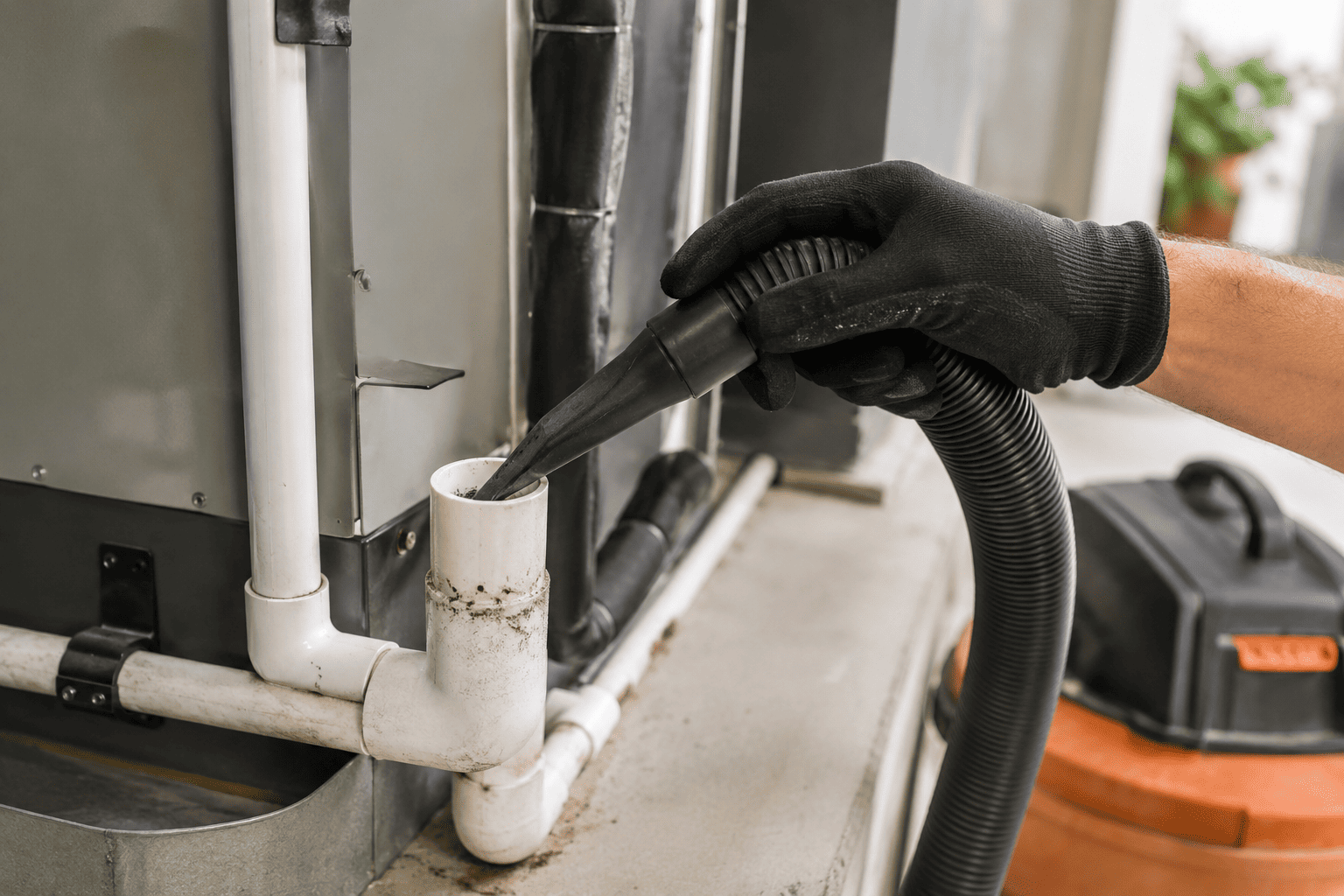
Step 4: Use a Wet/Dry Vacuum
One of the most effective DIY methods is using a shop vacuum.
How to Vacuum the Drain Line
- Go to the outside drain line exit
- Attach a wet/dry vacuum hose tightly to the pipe
- Seal gaps with tape or cloth
- Run the vacuum for 1–3 minutes
This often removes algae, sludge, and debris clogging the line.
Step 5: Flush the Drain Line
After vacuuming, flush the line using:
- Distilled vinegar
- Warm water
- HVAC-approved drain cleaner
Avoid harsh chemical drain cleaners that may damage PVC piping or HVAC components.
Vinegar Cleaning Method
Pour approximately one cup of distilled white vinegar into the drain line access opening. Let it sit for 30 minutes before flushing with water.
This helps:
- Break down algae
- Kill mold spores
- Reduce bacterial buildup
- Prevent future clogs
Step 6: Check Drain Pan Condition
Damaged drain pans may require replacement. Inspect the drain pan for:
- Rust
- Cracks
- Standing water
- Overflow damage
Step 7: Restore Power and Test the System
Turn the breaker and thermostat back on. Verify:
- Proper drainage
- No water leaks
- Normal cooling operation
- Improved airflow and humidity control
How Often Should You Clean an AC Drain Line?
For most Dallas–Fort Worth homes, HVAC professionals recommend cleaning the AC drain line every 3 to 6 months. Homes with:
- Pets
- High dust levels
- Older HVAC systems
- Heavy AC usage
- High humidity
may require more frequent maintenance. Preventive cleaning significantly reduces the risk of costly water damage and emergency HVAC repairs.
Can a Clogged Drain Line Stop the AC From Working?
Yes. Many modern systems include a safety float switch that automatically shuts off the air conditioner if the condensate drain pan fills with water. This protects your home from flooding and ceiling damage. Homeowners often think:
- The thermostat failed
- The AC compressor broke
- The system lost power
When the real issue is simply a blocked condensate drain line.
DIY AC Drain Line Cleaning vs Professional HVAC Service
DIY Cleaning Works Best For:
- Minor clogs
- Routine maintenance
- Preventive care
- Light algae buildup
Professional HVAC Service Is Better For:
- Severe blockages
- Repeated drain clogs
- Mold contamination
- Water-damaged systems
- Drain pan replacement
- Frozen evaporator coils
- Full HVAC inspections
Experienced HVAC technicians can also inspect related issues such as:
- Refrigerant problems
- Dirty evaporator coils
- Blower motor performance
- Drain line slope issues
- Condensate pump failures
How Much Does AC Drain Line Repair Cost in Dallas?
Costs vary depending on:
- Severity of clog
- Drain line accessibility
- Water damage
- System condition
- Need for replacement parts
Minor drain cleaning is usually inexpensive compared to major ceiling or mold repairs caused by neglected drainage issues.
Professional AC Drain Line Cleaning in Dallas–Fort Worth
While some minor clogs can be cleaned with DIY methods, persistent drainage problems often require professional diagnosis.
At Astar Air Conditioning, Plumbing & Electric, experienced HVAC technicians help homeowners across Dallas–Fort Worth resolve clogged AC drain lines, water leaks, humidity issues, airflow problems, and cooling system failures.
- Website:https://astardfw.com/
- Email: contact@astardfw.com
- Serving Dallas-Fort Worth, TX
Final Thoughts
A clogged air conditioner drain line may seem like a small issue, but it can quickly lead to serious HVAC problems, water damage, mold growth, and indoor comfort issues if ignored.
Understanding how to clean an AC drain line, recognizing early warning signs, and maintaining your HVAC system properly can help protect your home and extend the life of your air conditioner.
For homeowners in Dallas–Fort Worth, preventive HVAC maintenance is especially important due to the region’s long, humid cooling season and heavy AC usage. Whether you need routine drain line cleaning, emergency AC repair, or a complete cooling system inspection, addressing drainage issues early can save significant time, money, and stress later.