


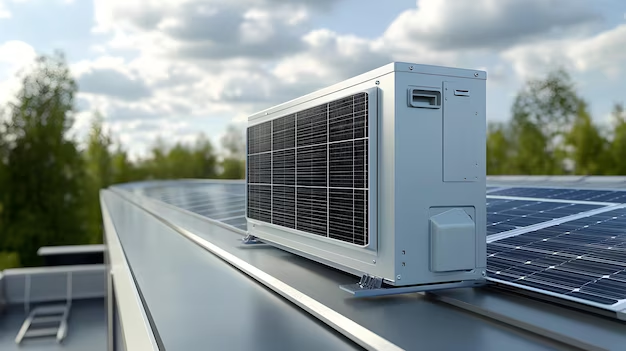
Running a 1.5-ton air conditioner on solar power is becoming one of the most-searched energy-saving solutions in hot regions like Dallas-Fort Worth. With rising electricity bills, frequent summer AC use, and growing interest in renewable energy, homeowners want to know exactly how many solar panels are required to power a 1.5-ton AC efficiently.
In this guide, we’ll break down solar panel calculations, AC power consumption, battery needs, inverter sizing, Dallas sunlight conditions, installation costs, energy-saving tips, and HVAC tips from experienced AC professionals at Astar Air Conditioning, Plumbing & Electric.
Understanding How Much Electricity a 1.5 Ton AC Uses?
Before calculating solar panel requirements, you first need to understand how much electricity a 1.5 ton air conditioner actually consumes.
A 1.5 ton AC typically uses:
- 1,200 to 2,000 watts per hour
- Around 1.2 kWh to 2 kWh of electricity
- 8 to 16 kWh daily, depending on runtime
However, the exact energy consumption depends on several factors:
Factors That Affect AC Power Consumption
-
Type of Air Conditioner
Different systems consume different amounts of electricity:
- Central air conditioning systems
- Ductless mini split systems
- Window AC units
- Inverter air conditioners
- Variable-speed HVAC systems
Modern inverter AC systems consume significantly less power compared to older fixed-speed systems.
-
SEER Rating
The higher the SEER rating, the lower the energy usage. High-efficiency systems with:
- SEER2 ratings
- ENERGY STAR certification
- Variable-speed compressors
can reduce electricity demand dramatically.
-
Dallas Climate Conditions
In Dallas-Fort Worth summers, air conditioners run longer because of:
- Extreme heat
- High humidity
- Longer cooling seasons
- Heat gain from roofing and windows
Homes in Texas often require AC systems to operate for 8–14 hours daily during peak summer.
-
Home Insulation
Poor insulation forces your HVAC system to work harder. Energy loss from:
- Attics
- Ductwork
- Windows
- Doors
- Roofing
increases AC runtime and solar requirements.
Understanding the Power Requirements of a 1.5 Ton AC
Before calculating how many solar panels are needed, it’s important to understand how much electricity a 1.5 ton air conditioner actually consumes. The term “1.5 ton” refers to the cooling capacity of the unit rather than its physical weight. In HVAC terms, one ton equals 12,000 BTUs (British Thermal Units) per hour, which means a 1.5 ton AC provides around 18,000 BTUs of cooling capacity every hour.
From years of working with residential HVAC systems, most 1.5 ton air conditioners typically consume between 1.5 kW and 2 kW of electricity, depending on the model, efficiency rating, and compressor technology. Standard non-inverter systems usually operate closer to 2 kW, while modern inverter-based or high-efficiency 5-star systems often stay near 1.5 kW under normal conditions. Understanding this power usage helps homeowners estimate electricity costs and determine the right solar system size for their cooling needs.
|
Aspect |
Details |
|
Cooling Capacity |
1.5 Ton AC = 18,000 BTU/hour |
|
Power Consumption |
Approximately 1.5 kW to 2 kW |
|
Standard AC Usage |
Around 2 kW |
|
Energy-Efficient Models |
Around 1.5 kW |
|
Common AC Type |
Inverter and Non-Inverter Systems |
How Many Solar panels Are Needed to run a 1.5 Ton AC?
To power a 1.5-ton AC, you need 4 to 5 solar panels of 585W each. but you first need to understand how much electricity the air conditioner uses each day.
For example, if your 1.5-ton AC consumes around 1.5 kW of power and runs for about 8 hours daily, the total electricity usage would be:
1.5 kW×8 hours=12 kWh/day
This means the AC uses approximately 12 kWh (units of electricity) per day.
However, actual energy usage can change depending on several factors, including:
- Outdoor temperature
- Home insulation
- Thermostat settings
- Humidity levels
- AC efficiency
In hotter areas like Dallas-Fort Worth, air conditioners often run longer during summer, which increases daily electricity consumption.
Next, you need to calculate how much electricity one solar panel can produce. A 585W solar panel receiving around 5 hours of peak sunlight daily can generate approximately:
585 W÷1000×5 sunlight hours=2.925 kWh/day
So, one 585W solar panel can produce about 2.925 kWh of electricity per day under good sunlight conditions.
Now divide the AC’s daily electricity requirement by the output of one solar panel:
12÷2.925≈4.1
This calculation shows that you would need approximately 4 to 5 solar panels to run a 1.5 ton AC under these conditions. HVAC and solar professionals usually recommend adding extra capacity to account for:
- Cloudy weather
- System losses
- Panel efficiency reduction
- Future energy needs
So, most homeowners typically install around 5 to 6 solar panels for reliable performance.
|
Step |
Formula / Result |
|
Daily AC Consumption |
1.5 kW × 8 hours = 12 kWh/day |
|
Single Panel Output |
585W × 5 sunlight hours = 2.925 kWh/day |
|
Estimated Panel Calculation |
12 ÷ 2.925 ≈ 4.1 panels |
|
Recommended Solar Panels |
Approximately 4–6 Panels |
Solar Panel Requirements for Different AC Star Ratings
The energy efficiency of your air conditioner directly affects how many solar panels you’ll need. Higher-rated inverter AC systems consume less electricity, which reduces the total solar capacity required. Less efficient non-inverter models demand more power and therefore require additional panels.
Based on practical HVAC and solar usage estimates, here’s an approximate comparison of solar panel requirements for different AC efficiency ratings using 585W solar panels.
|
Star Rating |
AC Type |
Average Wattage |
Daily Energy Usage |
Estimated 585W Panels |
|
1-Star |
Non-Inverter |
2,200 W |
17.6 kWh/day |
≈ 6 Panels |
|
2-Star |
Non-Inverter |
2,000 W |
16.0 kWh/day |
≈ 5.5 Panels |
|
3-Star |
Inverter |
1,800 W |
14.4 kWh/day |
≈ 5 Panels |
|
4-Star |
Inverter |
1,600 W |
12.8 kWh/day |
≈ 4.5 Panels |
|
5-Star |
Inverter |
1,200 W |
9.6 kWh/day |
≈ 3–4 Panels |
This is why many homeowners in hot climates like Dallas-Fort Worth choose inverter-based systems. They not only improve cooling efficiency but also reduce long-term solar installation costs.
Can You Run a 1.5 Ton AC on Solar Panels?
Yes, a 1.5-ton air conditioner can absolutely run on solar power when the system is properly designed. The total number of solar panels required depends on factors such as:
- Inverter capacity
- AC efficiency rating
- Daily runtime
- Sunlight hours
- Battery backup needs
In most cases, homeowners need around 7 to 8 high-capacity 585W solar panels to comfortably support a 1.5-ton AC system while generating approximately 3 kWh to 5 kWh of usable electricity during the day.
For comparison:
- A 1-ton AC generally consumes around 1,500W to 1,800W
- That setup usually requires about 4 to 6 solar panels
Similarly, a 1 HP air conditioner may also require approximately 4 to 6 solar panels, depending on operating conditions and energy efficiency.
If your goal is to create a fully off-grid cooling system, combining solar panels with a heat pump or inverter HVAC system is often the most energy-efficient approach. This combination improves overall efficiency while reducing electricity demand throughout the year.
Best Solar Setup For a 1.5 Ton AC in Dallas
Choosing the right solar setup for a 1.5 ton air conditioner is especially important in Dallas-Fort Worth, where extreme summer temperatures can significantly increase cooling demands. A properly designed system not only helps reduce electricity bills but also improves energy efficiency and long-term HVAC performance.
To run a 1.5-ton AC efficiently on solar power, homeowners should focus on selecting high-quality solar components that can handle daily cooling loads, peak summer usage, and potential power outages.
Recommended Solar Panels
The type of solar panels you choose directly affects overall system efficiency and energy production. For Dallas homes, high-efficiency panels are usually the best option because they generate more electricity while using less roof space.
Recommended options include:
- Monocrystalline solar panels
- High-efficiency solar modules
- Tier-1 solar panel brands
Monocrystalline panels are particularly popular because they perform better in high temperatures and offer improved long-term durability, making them ideal for Texas weather conditions.
Solar Inverter Requirements
The inverter is one of the most important parts of a solar HVAC system because it converts solar-generated DC electricity into usable AC power for your air conditioner.
A typical 1.5 ton AC system generally requires:
- A minimum 2kW to 3kW solar inverter
For larger homes or whole-home HVAC systems, advanced inverter options provide better performance and reliability, including:
- Hybrid solar inverters
- Pure sine wave inverters
These inverter systems help manage startup power surges, improve efficiency, and support smoother operation for modern inverter air conditioners and central HVAC systems.
Battery Backup Systems
Battery storage becomes extremely valuable for homeowners who want reliable cooling during:
- Nighttime hours
- Severe weather
- Power outages
- Texas grid instability
- Peak electricity pricing periods
A battery backup system stores excess solar energy produced during the day so it can be used later when sunlight is unavailable.
Popular battery storage options include:
- Lithium-ion batteries
- Tesla Powerwall-style systems
- Hybrid solar battery systems
For many Dallas homeowners, combining solar panels, battery storage, and a high-efficiency HVAC system creates a more dependable and energy-efficient cooling solution throughout the year.
How Much Does It Cost To Run a 1.5 Ton AC on Solar?
The estimated cost is:
|
System Size |
Estimated Cost |
|
Small AC-only setup |
$4,000–$8,000 |
|
Full solar HVAC integration |
$10,000–$25,000 |
|
Solar + battery backup |
$18,000–$40,000 |
Costs vary depending on:
- panel brand
- battery storage
- inverter type
- roof complexity
- permitting
- electrical upgrades
Federal solar tax credits can significantly reduce installation costs..
Final Thoughts on Solar Panel Requirements for a 1.5 Ton AC
Running a 1.5 ton AC on solar power is becoming an increasingly practical solution for homeowners looking to reduce electricity costs and improve energy efficiency—especially in hot climates like Dallas-Fort Worth. In most cases, a 1.5 ton air conditioner will require approximately 4 to 6 high-efficiency 585W solar panels, depending on factors such as:
- Daily AC runtime
- Outdoor temperatures
- Home insulation
- AC energy efficiency
- Available sunlight hours
Choosing an energy-efficient inverter AC, properly sizing your solar system, and investing in quality solar components can significantly improve long-term performance while lowering monthly utility bills. A well-designed setup not only supports reliable cooling but also helps reduce strain on the electrical grid and supports more sustainable energy usage.
Book an HVAC and Solar Consultation With Astar DFW
If you’re considering upgrading your cooling system or improving your home’s energy efficiency, the experts at Astar Air Conditioning, Plumbing & Electric can help evaluate your HVAC needs and recommend energy-efficient solutions tailored for Dallas-Fort Worth homes. Book a consultation with their experienced team to explore smarter cooling options, HVAC upgrades, and ways to reduce your long-term energy costs.
- Website:https://astardfw.com/
- Email: contact@astardfw.com
- Serving Dallas-Fort Worth, TX