


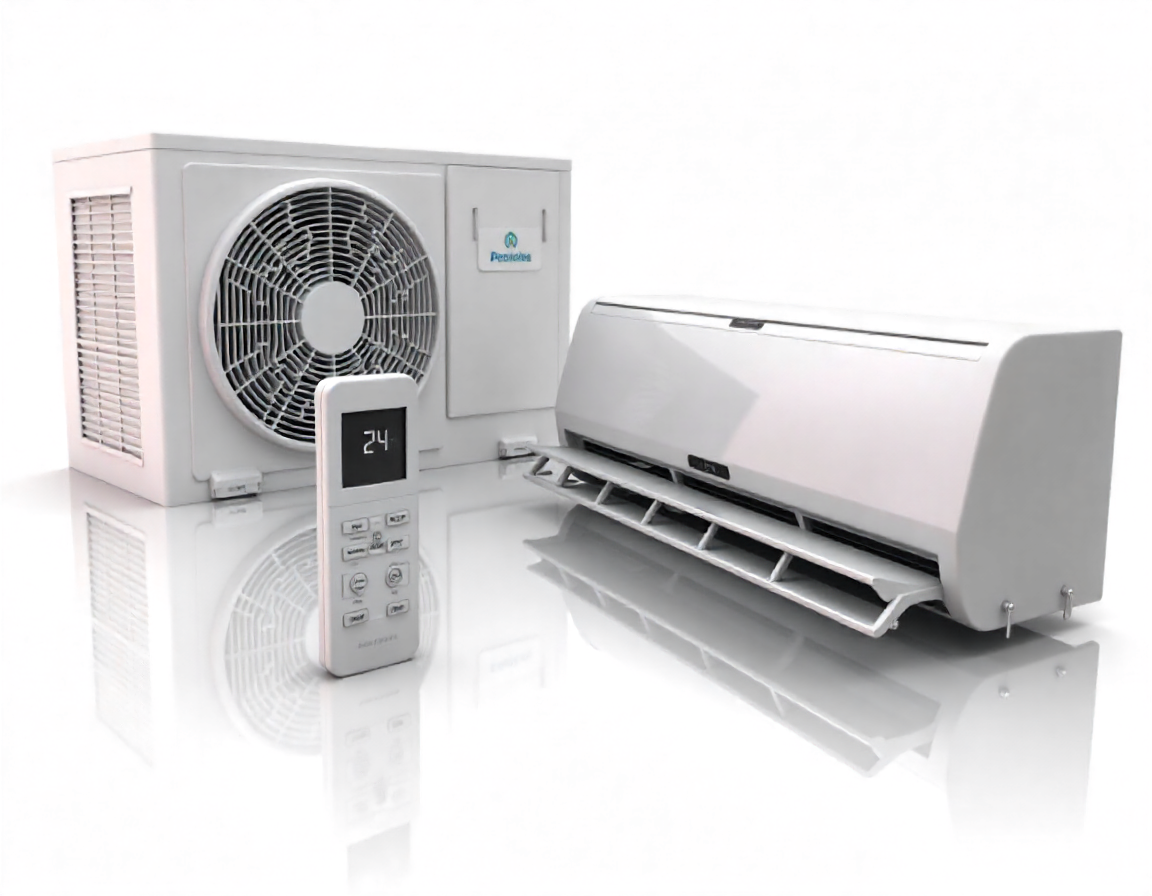
When comparing ductless mini-split vs multi-split AC systems in Dallas, the main difference lies in how many indoor units connect to the outdoor condenser. A mini-split system typically pairs one outdoor unit with one indoor unit, making it ideal for cooling a single room or addition. A multi-split system, however, connects several indoor units to one outdoor unit, allowing multiple rooms to be cooled independently. For Dallas homes, the best option depends on the property layout, cooling zones, installation cost, and long-term energy efficiency.
In this in-depth guide, we will cover everything you need to know about ductless air conditioning systems. You will learn how mini-split and multi-split systems work, their advantages and drawbacks, cost comparisons in Dallas, installation considerations, energy efficiency factors, and which option performs best for Texas homes.
Understanding Ductless Air Conditioning Systems
Ductless air conditioning systems, often called mini-split AC systems, have become increasingly popular in Dallas because they offer efficient cooling without traditional ductwork. Many homes in the Dallas–Fort Worth metroplex have older duct systems that leak air, reduce efficiency, and increase energy bills. Ductless systems eliminate those losses.
Instead of pushing air through ducts, a ductless system transfers cooled refrigerant directly from the outdoor unit to indoor air handlers installed in specific rooms or zones.
Key Components of a Ductless System
A typical ductless AC system includes:
- Outdoor condenser unit
- Indoor air handler(s)
- Refrigerant lines
- Electrical wiring
- Condensate drainage
- Remote or smart thermostat controls
These systems are known for quiet operation, high energy efficiency, and precise temperature control.
What Is a Ductless Mini-Split AC System?
A ductless mini-split AC system is a type of air conditioning system that cools a single room or zone without using traditional ductwork. It consists of one outdoor condenser unit connected to one indoor air handler through refrigerant lines and electrical wiring. The indoor unit is usually mounted on a wall or ceiling and delivers conditioned air directly into the room.
Because there are no ducts involved, mini-split systems avoid the air leakage and energy losses that often occur in central HVAC systems, making them a highly efficient cooling option for many Dallas homes.
How Mini-Split Systems Work?
- The indoor air handler pulls warm air from the room into the system.
- The air passes over evaporator coils filled with refrigerant, which absorb heat from the air.
- The refrigerant captures and carries the heat through insulated refrigerant lines.
- The cooled air is circulated back into the room to lower the indoor temperature.
- The absorbed heat travels to the outdoor condenser unit through the refrigerant lines.
- The outdoor unit releases the heat outside, completing the cooling cycle.
- Because no ductwork is used, energy loss is minimal and cooling efficiency remains high.
- The system delivers consistent and efficient cooling, even during extreme Dallas summer temperatures.
Common Uses for Mini-Split Systems
Mini-split systems are particularly useful in situations where installing ductwork would be expensive or impractical. Many homeowners in the Dallas–Fort Worth area install mini-splits to solve cooling problems in specific rooms or new additions.
Mini-splits are commonly installed in:
- Home additions where extending existing ductwork is difficult
- Converted garages used as living spaces or home gyms
- Attics turned into bedrooms or offices
- Sunrooms that experience excessive heat during the summer
- Detached offices or backyard studios
- Small apartments or studio spaces
- Guest rooms that are not used daily
These systems provide targeted cooling, allowing homeowners to maintain comfortable temperatures without overworking the main HVAC system.
What Is a Multi-Split AC System?
A multi-split AC system is a ductless air conditioning configuration that allows multiple indoor air handlers to connect to a single outdoor condenser unit. Instead of installing separate outdoor units for each room, the multi-split system uses one central condenser to power several indoor units placed throughout the home.
This setup allows homeowners to cool multiple rooms independently while keeping the exterior of the home less cluttered with equipment, making it an efficient and space-saving solution for larger homes or multi-room cooling needs.
How Multi-Split Systems Work?
In a multi-split system, each indoor air handler is connected to the same outdoor condenser through separate refrigerant lines. Every indoor unit has its own thermostat or remote control, which allows each room to operate independently.
For example, different areas of the home can maintain different temperatures based on comfort preferences:
- Living room: 72°F
- Bedroom: 70°F
- Home office: 74°F
This zoned cooling capability is one of the biggest advantages of multi-split systems. Instead of cooling the entire house to the same temperature, the system only conditions the spaces being used, which can improve overall energy efficiency.
Typical Multi-Split Applications
Multi-split AC systems are often chosen when a property requires cooling in several rooms but still wants the efficiency of a ductless setup. In Dallas, these systems are commonly installed in:
- Whole-home ductless installations where traditional ducts are not available
- Townhomes and duplexes with multiple living areas
- Older Dallas homes without ductwork that need modern cooling solutions
- Small commercial buildings or offices with multiple rooms
- Multi-room cooling setups where each space requires independent temperature control
For homeowners who want zoned comfort across several rooms, a multi-split system can provide a practical and energy-efficient alternative to traditional central air conditioning.
What is the difference between Mini-Split vs Multi-Split AC Systems?
The main difference is that a mini-split system cools a single room using one indoor unit, while a multi-split system connects multiple indoor units to one outdoor unit, allowing independent cooling across several rooms.
Mini-Split vs Multi-Split AC Systems- Comparison Table
|
Feature |
Mini-Split AC System |
Multi-Split AC System |
|
Number of Indoor Units |
One outdoor unit connected to one indoor air handler |
One outdoor unit connected to multiple indoor air handlers |
|
Cooling Coverage |
Designed for single-room or single-zone cooling |
Designed for multiple rooms or whole-home zoning |
|
Installation Complexity |
Simpler installation with fewer components |
More complex installation with multiple connections |
|
Piping & Wiring |
Requires less refrigerant piping and wiring |
Requires multiple refrigerant lines and electrical connections |
|
Cost |
Lower upfront installation cost |
Higher installation cost but scalable for larger spaces |
|
Energy Efficiency |
Highly efficient for cooling individual rooms |
Highly efficient for zoned cooling across multiple rooms |
Mini-Split vs Multi-Split: Which Is More Energy Efficient?
Energy efficiency depends on home size, usage patterns, and zoning requirements.
Mini-Split Efficiency
Mini-splits are extremely efficient when cooling one space consistently.
They are ideal for:
- Home offices
- Guest rooms
- Small apartments
Multi-Split Efficiency
Multi-split systems are more efficient when cooling multiple rooms at different temperatures.
They reduce the need for several outdoor condensers.
Installation Costs in Dallas: Mini-Split vs Multi-Split
Cost is often a major deciding factor for homeowners choosing between ductless systems. The table below outlines the typical installation cost ranges in Dallas and the key factors that influence pricing.
|
Category |
Mini-Split AC System |
Multi-Split AC System |
|
Average Installation Cost in Dallas |
$3,000 – $6,000 per system |
$7,000 – $15,000+ depending on setup |
|
System Coverage |
Usually cools one room or single zone |
Designed to cool multiple rooms with one outdoor unit |
|
Main Cost Factors |
Unit capacity, installation complexity, electrical upgrades, wall mounting requirements |
Number of indoor units, total system capacity, home size, installation complexity |
|
Installation Scope |
Simpler setup with fewer components and connections |
More complex setup with multiple indoor units and refrigerant lines |
|
Best For |
Small spaces, additions, garages, or single rooms |
Multi-room cooling or whole-home ductless systems |
An experienced HVAC contractor in Dallas can evaluate your home’s layout, cooling needs, and electrical setup to determine the correct system size and installation approach.
Best Homes in Dallas for Mini-Split Systems
Mini-split systems are a great choice when you need cooling for a single room or specific area rather than the entire house. Because they operate independently, they provide targeted comfort without requiring major HVAC modifications.
They work especially well in situations where adding ductwork would be expensive or impractical. Many homeowners in Dallas install mini-splits to cool spaces that traditional central AC systems struggle to reach.
Mini-split systems are commonly used in:
- Garage conversions turned into living spaces, gyms, or workshops
- Small homes that don’t require a full central cooling system
- Room additions where extending ductwork is difficult
- Detached home offices or backyard studios
- Studio apartments or compact living spaces
They are also frequently installed in historic Dallas homes that were built without ductwork, allowing homeowners to enjoy modern air conditioning without major structural renovations.
Which Homes are Ideal for Multi-Split Systems in Dallas?
Multi-split systems are designed for cooling multiple rooms while maintaining individual temperature control in each space. Instead of installing several outdoor units, a single condenser powers multiple indoor air handlers throughout the home.
This makes them a practical option for homeowners who want zoned comfort throughout the house.
Multi-split systems are ideal for:
- Multi-story homes where different floors need separate cooling control
- Older homes without duct systems that need a whole-home cooling solution
- Homes with hot and cold spots, where some rooms stay warmer than others
- Homes undergoing renovations or remodeling, where new cooling zones are being created
In many cases, a well-designed multi-split system can replace a traditional central air conditioning system, providing efficient cooling with greater temperature control in each room.
Pros and Cons of Mini-Split vs Multi-Split AC Systems
|
System Type |
Advantages |
Drawbacks |
|
Mini-Split AC System |
• Lower installation cost • Simple and quick installation • High energy efficiency • Ideal for small rooms or single spaces • Fast setup with minimal disruption |
• Only cools one zone • Not suitable for whole-home cooling • Multiple systems required for larger homes |
|
Multi-Split AC System |
• One outdoor unit can cool multiple rooms • Zoned temperature control for each room • Cleaner exterior with fewer outdoor units • Efficient solution for multi-room homes |
• Higher upfront installation cost • More complex installation process • If the outdoor unit fails, all indoor zones are affected |
How to Choose the Right Ductless AC System for Your Home?
Selecting the right ductless air conditioning system depends on several important factors, including your home’s size, cooling requirements, budget, and long-term energy efficiency goals.
1. Home Size
The size of your home plays a major role in determining the right system. Mini-split systems are ideal for smaller homes or single rooms, while multi-split systems are better suited for larger homes that require cooling in multiple areas.
2. Number of Rooms That Need Cooling
Consider how many rooms or zones require air conditioning. If you only need cooling in one specific area, a mini-split system may be sufficient. However, if several rooms need independent temperature control, a multi-split system provides better flexibility.
3. Budget and Installation Cost
Budget is another important factor. Mini-split systems typically have a lower upfront installation cost, making them a cost-effective option for single spaces. Multi-split systems require a larger investment but offer greater coverage and long-term convenience.
4. Energy Efficiency Goals
If your goal is to reduce energy consumption and monthly electricity bills, ductless systems can help. Multi-split systems offer zoned cooling, allowing you to cool only the rooms being used, which can significantly improve overall energy efficiency.
5. Home Layout and Design
The layout of your home also affects the best system choice. Homes with multiple floors, separate living areas, or rooms that experience uneven temperatures often benefit from multi-split zoning systems that provide better climate control across the property.
6. Future Expansion Needs
If you plan to renovate, add new rooms, or convert spaces such as garages or attics in the future, a multi-split system may offer greater flexibility, as additional indoor units can often be integrated into the system.
Why Choose Astar Air Conditioning, Plumbing & Electric For AC Systems in Dallas?
When it comes to ductless AC installation in the Dallas–Fort Worth area, many homeowners rely on Astar Air Conditioning, Plumbing & Electric. Our Professional AC technicians in Dallas help homeowners choose between mini-split and multi-split systems based on home size, cooling needs, and long-term efficiency. With over 28 years of experience and serving 2000+ customers in Dallas, our company provides:
- Expert ductless AC installation
- Energy-efficient system recommendations
- Licensed HVAC technicians
- Transparent pricing
- Reliable customer service
Final Thoughts: Which AC System Is Best?
Choosing between a ductless mini-split and multi-split AC system ultimately depends on your home’s layout, cooling needs, and long-term efficiency goals.
Mini-split systems are perfect for single-room cooling, home additions, and small spaces. Multi-split systems, on the other hand, provide whole-home zoned comfort, making them a great solution for larger properties or homes without ductwork.
For Dallas homeowners dealing with intense summer heat, ductless AC systems offer a powerful, energy-efficient alternative to traditional HVAC systems.
If you are considering installing a ductless air conditioning system, consulting with experienced HVAC professionals can help determine the best solution for your home.
A trusted AC Installation company in Dallas like Astar Air Conditioning, Plumbing & Electric can evaluate your property, recommend the right system, and ensure professional installation for long-lasting performance.